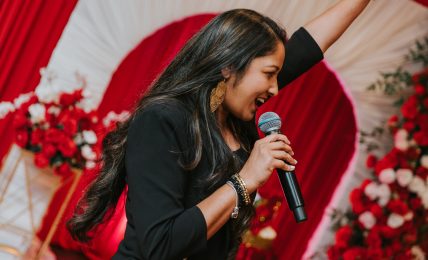
Meet Tamiel McKee Bey | writer, community educator, and herbal anthropologist
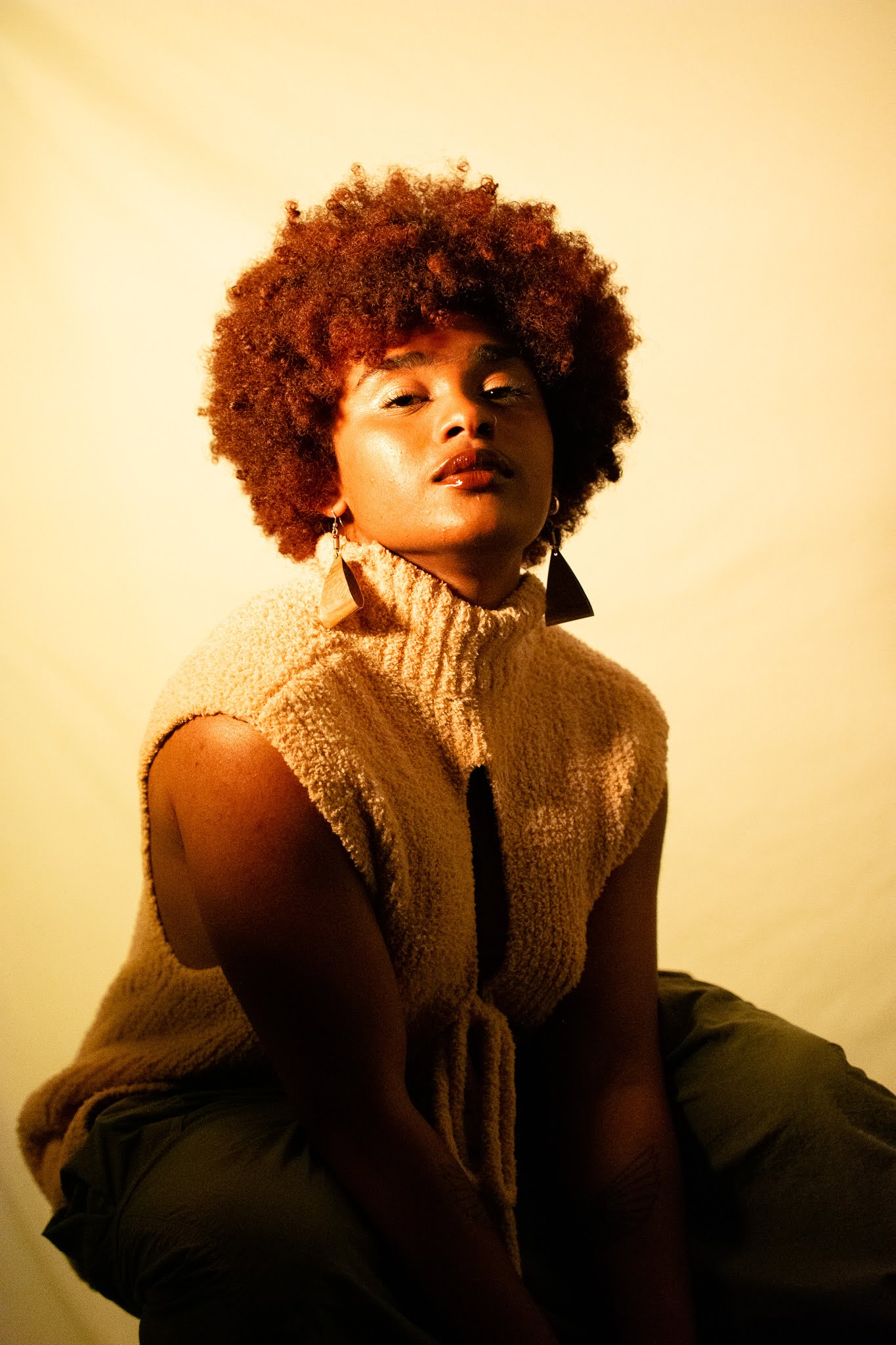


We had the good fortune of connecting with Tamiel McKee Bey and we’ve shared our conversation below.
Hi Tamiel, what is the most important factor behind your success?
Authenticity is the most important factor behind my success. Being exactly who I say I am, even when no one is watching. Upholding authenticity as a value and an ethic in how I function as an artist and a business owner produces work that is reliable. I believe that no matter what I create or what level in the process I decide to share my work it will always serve its function…and that can change based on the person. Regardless, me showing up as my whole self in my work allows people to connect to their whole selves. Maybe it’s a fragment that’s hooked at first, maybe it’s a piece they’ve been waiting for…clarity, awareness, understanding, curiosity.
Can you open up a bit about your work and career? We’re big fans and we’d love for our community to learn more about your work.
My work lives at the intersection of ritual and cultural preservation. Everything I create…a poem, an herbal blend, a community workshop…begins with the same intention: to show up as my whole self. I see myself as both an artist and an archivist, gathering what has been scattered across generations and translating it into forms that feel accessible and alive today.
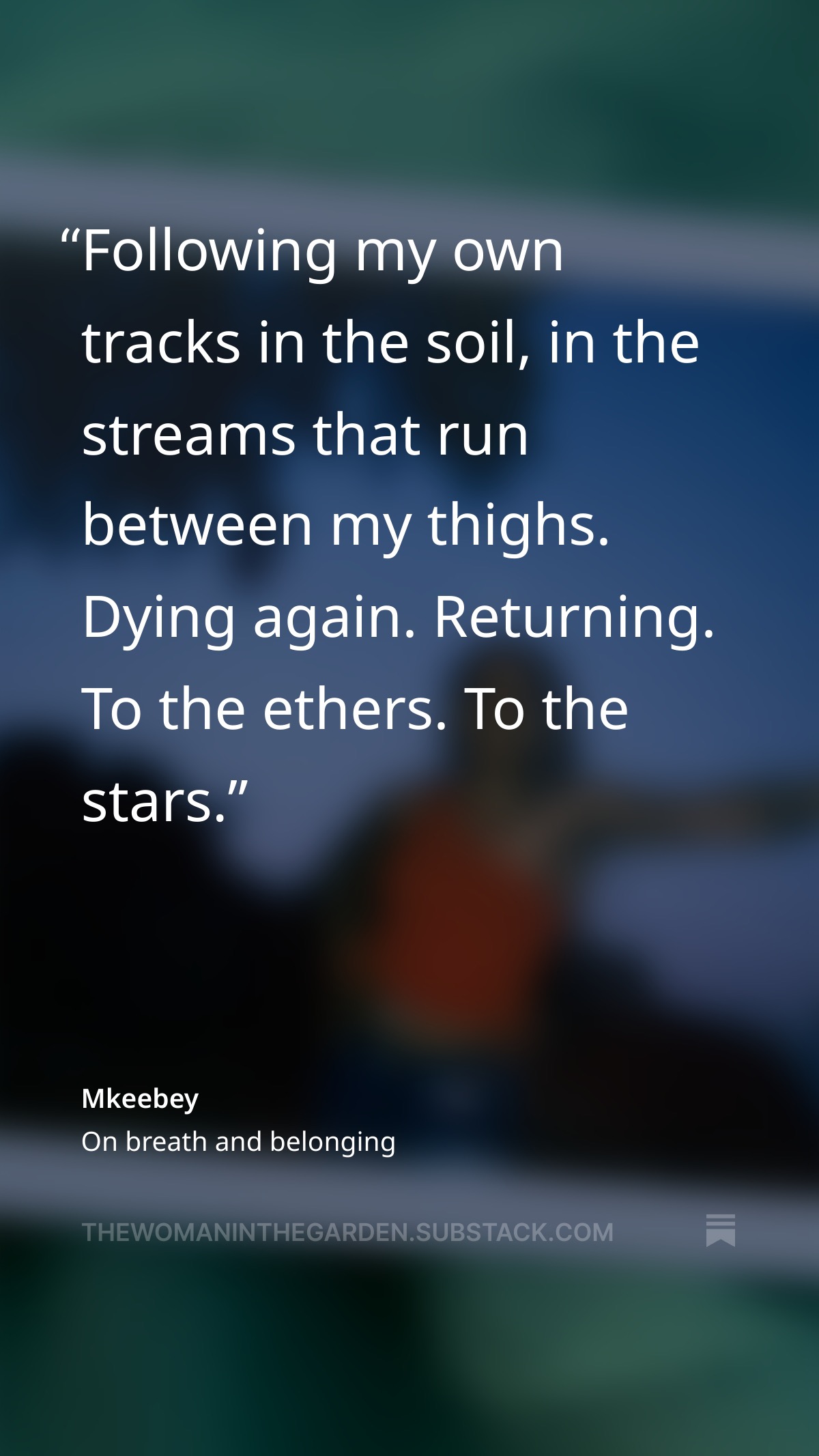
My writing is where I learned the practice, the gift of self-healing. Poetry and experimental essays allow me to explore identity, lineage, and emotional truth in ways that feel both intimate and communal. I write from the perspective of a Black, queer, nonbinary artist shaped by the African diaspora, and my work often centers Black women. girls, queer folx, Black folx…our survival, our tenderness, and the everyday rituals that keep us whole. For me, writing is a form of remembrance. It’s a way to document our stories before they’re lost, overlooked, or misinterpreted. My words hold the weight of my Chicago upbringing, the oral traditions I grew up around, and the spiritual and folk knowledge that continues to guide me.
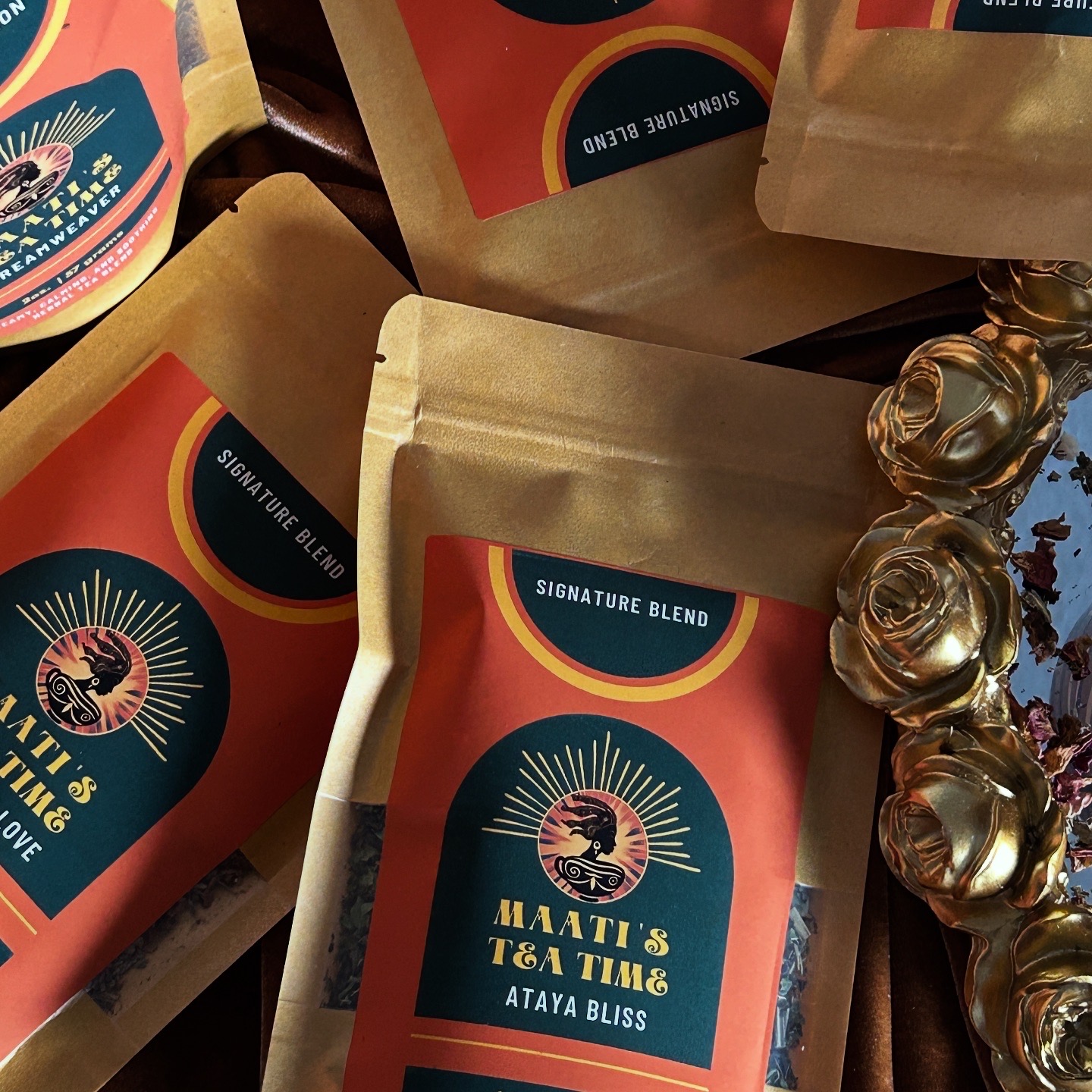
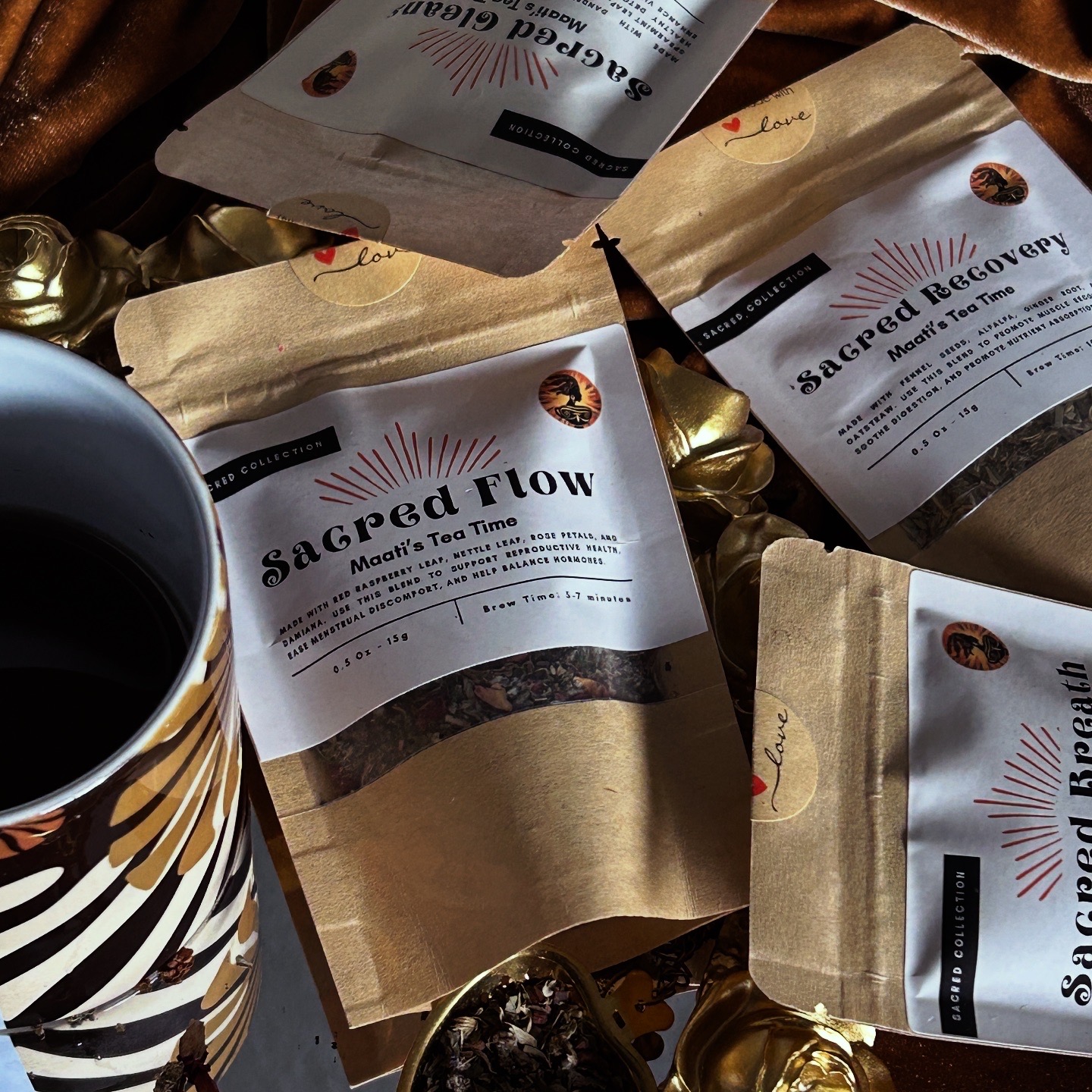
My herbal blends are another expression of that preservation. Maati’s Tea Time is an apothecary of diasporic memory. Each blend is crafted with intention, pulling from African herbalism, folk medicine, and the knowledge our ancestors carried through migration, resistance, and everyday survival. I think of blending as a cultural practice: a way of honoring the plants that sustained our people, the ceremonies they rooted, and the ways herbs continue to support our physical, emotional, and spiritual wellbeing. Every tea has a story, and when people drink them, they’re participating in ritual…slowly, gently reconnecting to traditions that were never meant to be forgotten.
I didn’t arrive here easily. For a long time, I was trying to survive environments where shrinking felt safer than being seen. Art gave me another way back to myself. Over the years, I learned that the more honest I am on the page, in my work, or in the spaces I curate, the more space I make for others to recognize themselves fully. That is the foundation of my work: creating portals of connection where people can feel and sometimes even release.
What sets my work apart is that it is rooted in lived experience and ancestral remembering. I draw deeply from the traditions of the African diaspora, our herbal knowledge, our storytelling practices, our communal ways of healing. I translate them into contemporary, accessible experiences and the goal is always the same: to create something reliable, emotionally resonant, and human.
The biggest lesson I’ve learned is that integrity sustains creativity. When I honor who I am, even when no one is watching, the work is stronger, truer, and more impactful. I want the world to know that my brand is a practice. It’s a commitment to truth, lineage, care, and intentional creativity. And every offering I share is an invitation for others to return to themselves, too.
Let’s say your best friend was visiting the area and you wanted to show them the best time ever. Where would you take them? Give us a little itinerary – say it was a week long trip, where would you eat, drink, visit, hang out, etc.
If my best friend visited Las Vegas, I’d show them the creative, community-centered side of the city:
Libraries
West Las Vegas Library – A grounding space filled with history and culture.
Bookstores:
Analog Dope (Arts District) – Black, Queer, Woman owned, vinyl + books, intentional, creative, always inspiring.
Creative + Cultural Spaces
HerWaistBeads (Gather House, Fremont) – Black Woman Owned, Community-rooted adornment, craft, and sacred creativity.
Girls Night In (Downtown) – Black Woman Owned, cozy paint-and-sip space that encourages creativity and connection.
Nature + Community Land
Obodo Farm (West Las Vegas) – A peaceful urban farm reconnecting Black folks to land, sustainability, and communal care.
Who else deserves some credit and recognition?
Who would I be today without my ancestors, named and unnamed. My community – Black Seeds Bloom Artists Collective. Free thinkers who challenge what it means to exist or not exist. Sun Ra for terming “Black people as a myth”.
Website: Maatisteatime.com | blackseedsbloom.org
Instagram: @thewomaninthegarden | @blackseedsbloom
Facebook: https://www.facebook.com/p/Maatis-Tea-Time-61556104089481/
Youtube: @thewomaninthegarden
Other: Substack:
https://open.substack.com/pub/thewomaninthegarden
Image Credits
The Garden Studio, Los Angeles, CA
Black Seeds Bloom Artists Collective
Maati’s Tea Time